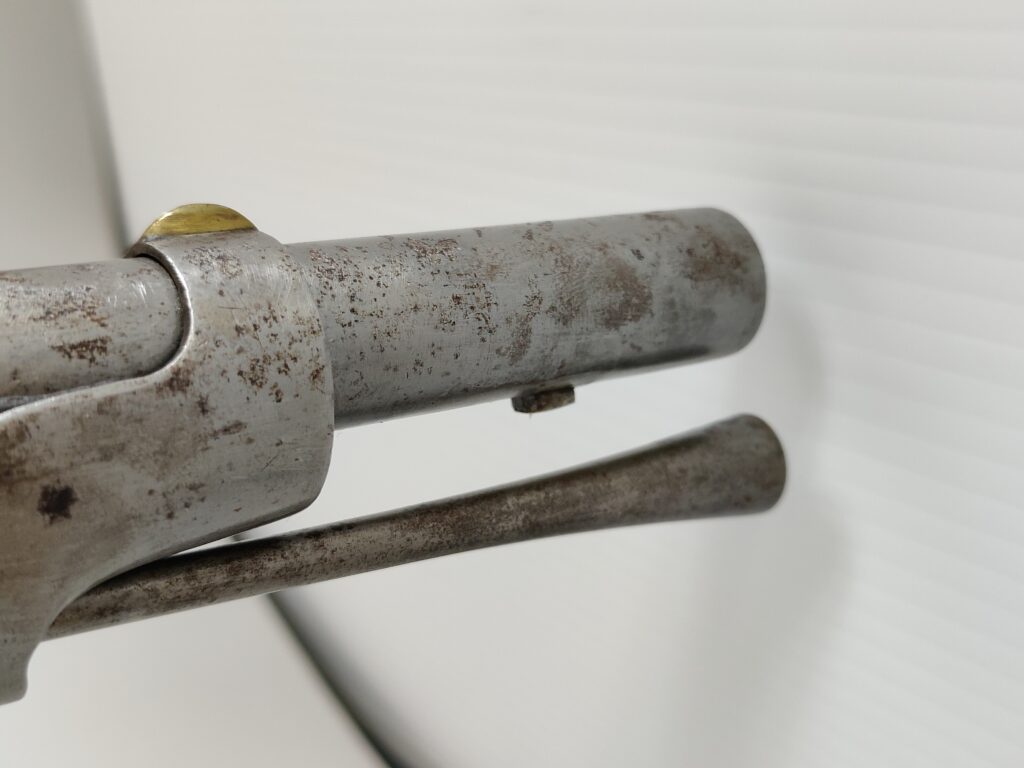

Author’s Note: This blog post is adapted from a short piece I wrote for Leatherneck, Magazine of the Marines. It is part of a series of briefs on historic long arms, commemorating the Marine Corps’ 250th anniversary year.
Technical Data
Weight: 8 lb. 15 oz. (approx.)
Overall Length: 57 1/2”
Barrel Length: 42”
Chambering: .69-caliber
Feed System: muzzleloader
Operating System: percussion
Rate of Fire: 3 rounds per minute effective
Range: 100 m effective (point target), 300 m effective (area target)
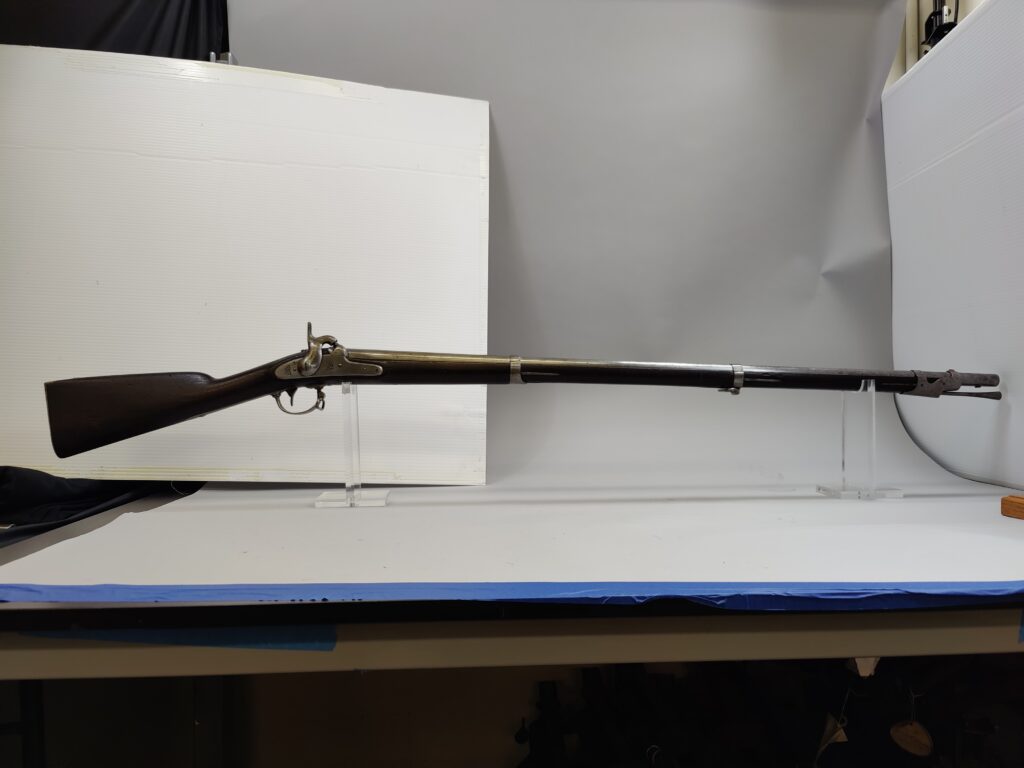
Description
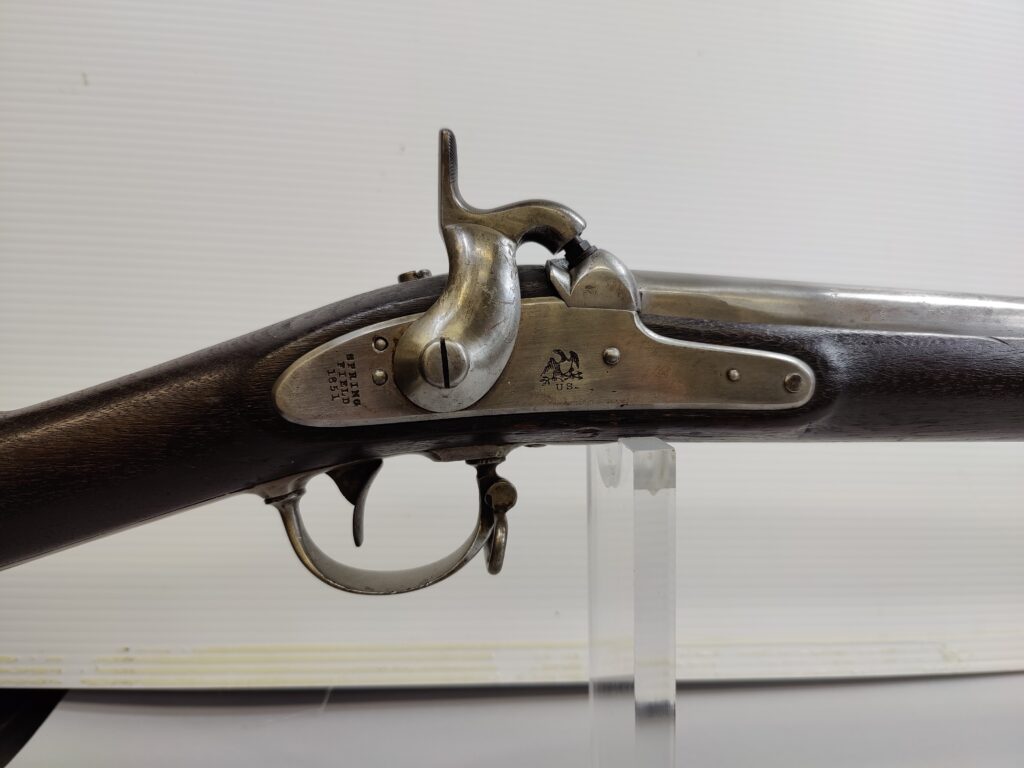
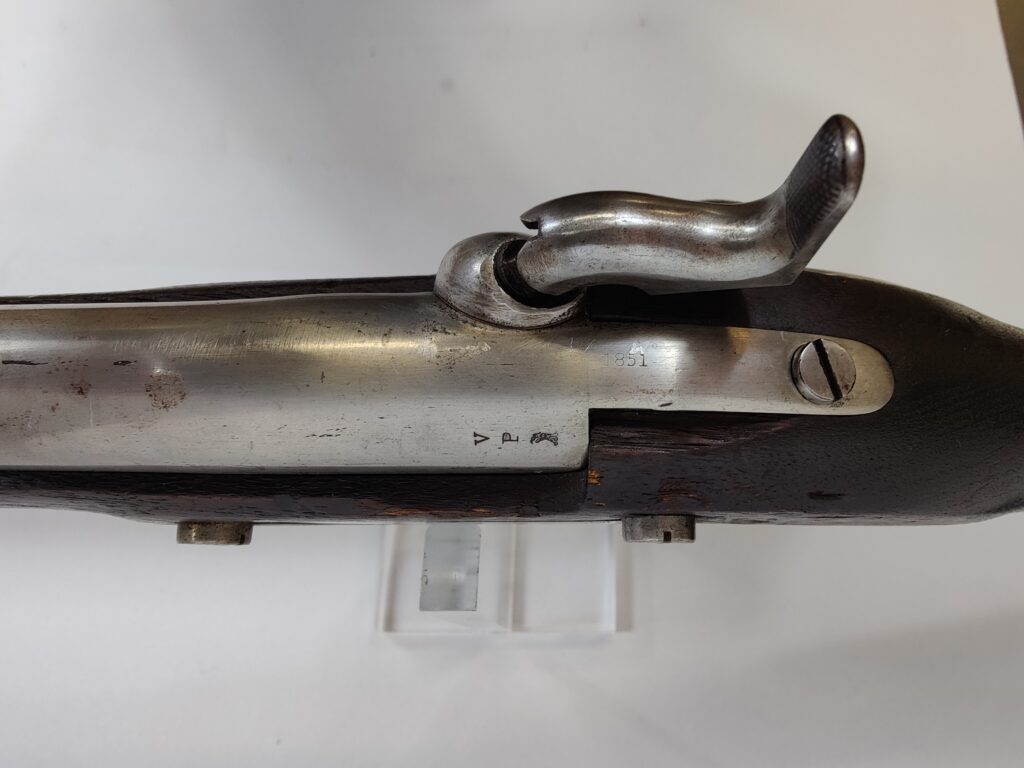
Though similar in form to its predecessors, the M1842 musket incorporates one crucial advantage over earlier designs: its use of a percussion ignition system. In practical use since the 1820s, percussion caps were functionally identical to modern centerfire primers, but were not fitted into metallic cartridges. Instead of striking a piece of flint against the hinged frizzen to ignite a small powder charge in the pan, a percussion firearm strikes the hammer against the cap to ignite the main powder charge directly. This system is faster, simpler and more reliable.
Development and Service History
The U.S. military began to field percussion-fired long arms for specialist units in the 1830s, beginning with two dragoon regiments. Soon thereafter, however, ordnance officers began to realize that the new technology could yield significant benefits for the military as a whole. That being the case, the percussion cap system was formally adopted in 1842; the still-new M1840 flintlock musket was redesigned as a caplock and the production lines retooled accordingly, resulting in the M1842. The two government armories and civilian contractors produced nearly 300,000 examples of this musket, tens of thousands of which were later rifled after 1855. The Army and Marine Corps used M1842s in significant numbers in the Mexican-American War (1846-1848) and throughout the Civil War.