
Author’s Note: This blog post is adapted from a short piece I wrote for Leatherneck, Magazine of the Marines. It is part of a series of briefs on historic long arms, commemorating the Marine Corps’ 250th anniversary year.
Technical Data
Weight: 8 lb. 8 oz. (approx.)
Overall Length: 56”
Barrel Length: 40”
Chambering: .58-caliber Minié ball
Feed System: muzzleloader
Operating System: percussion
Rate of Fire: 3 rounds per minute effective
Range: 732 m (maximum)
Description
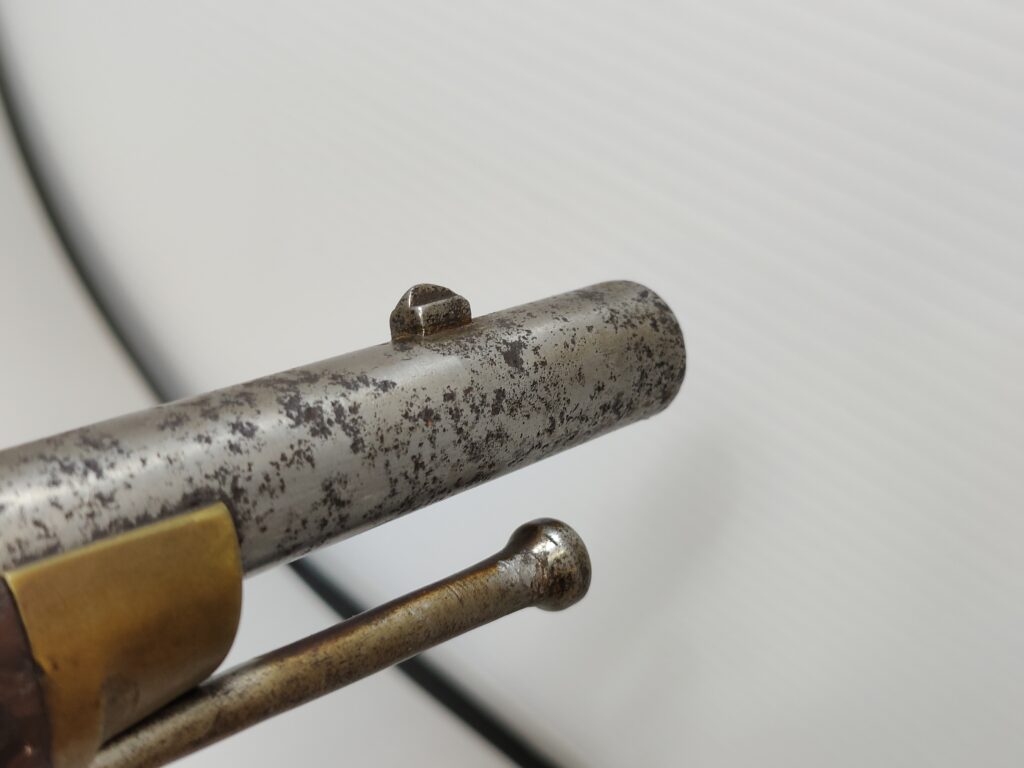
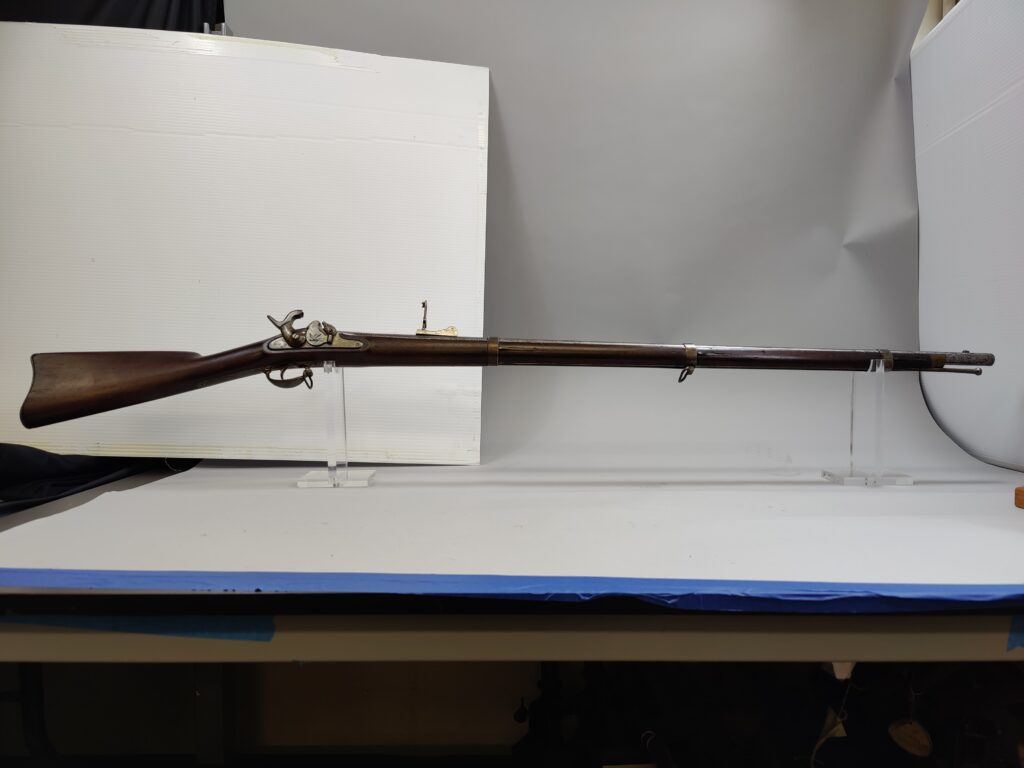
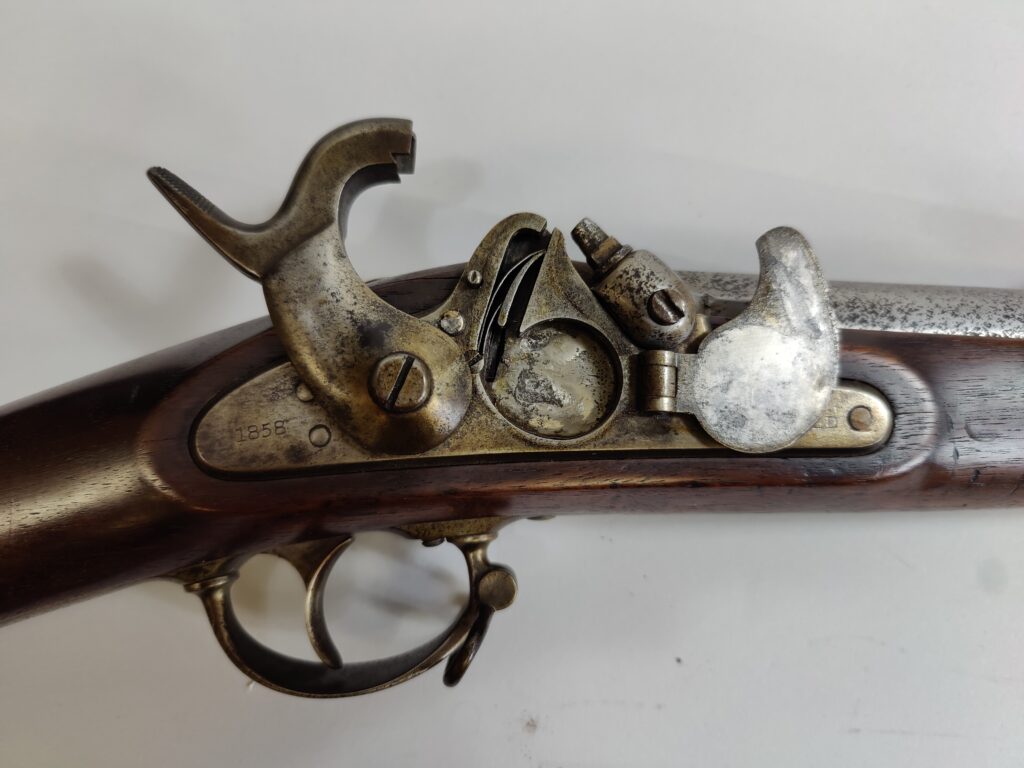
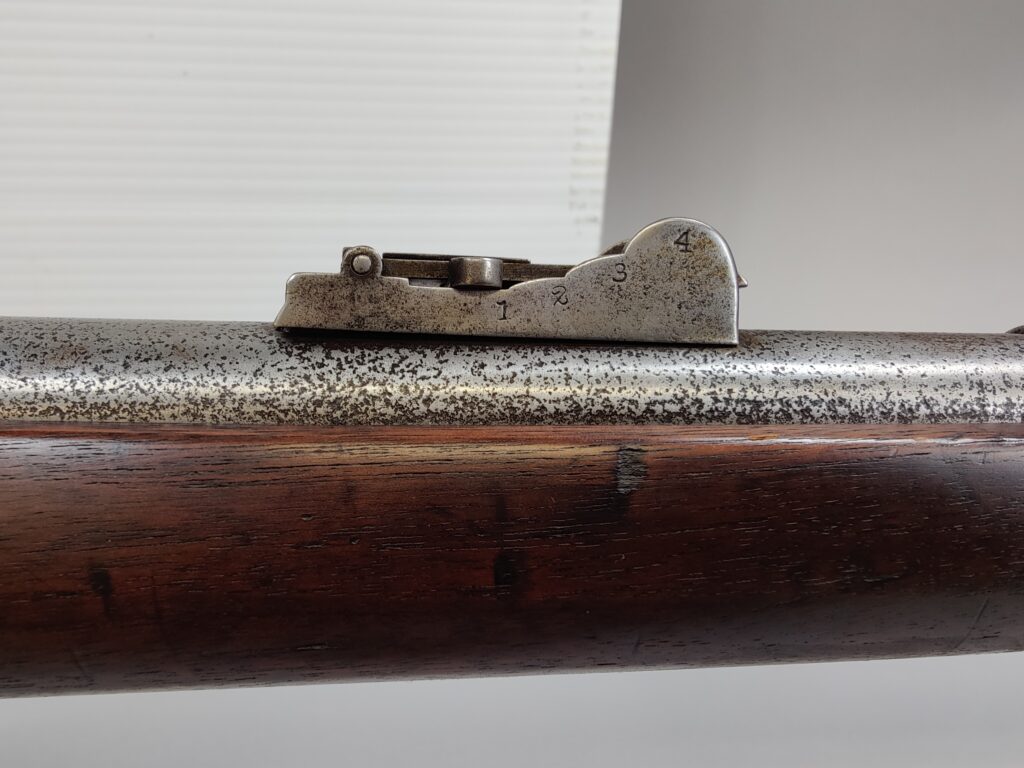
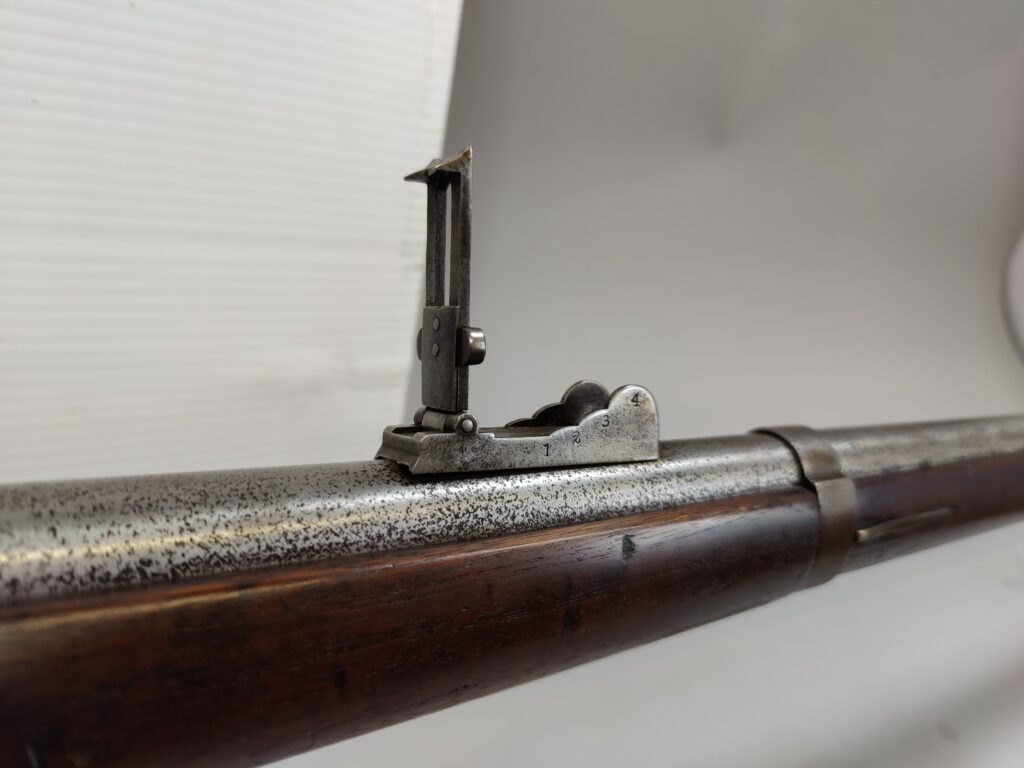
The M1855 rifle-musket is so called because it has a full-length barrel with three bands like contemporary smoothbore muskets but was produced with a rifled barrel. Muskets that left the factory as smoothbores but were later sent back to arsenals to be rifled are known as rifled muskets; in the nomenclature of the day, a rifle was specifically a rifled long arm that was shorter than a rifle-musket but longer than a carbine or musketoon. Shorter M1855 rifles were also produced using the same action as the rifle-musket and a shorter barrel with two bands. In addition to standard percussion caps, the M1855 was compatible with the Maynard tape primer system. Instead of individual brass caps, this system used a spool of paper tape with small pockets of priming compound embedded in it at regular intervals, with a corresponding notch in the hammer to cut off the excess tape each time the weapon was fired. Problems with moisture ruining the paper tape caused the Maynard system to quickly fall out of favor, leaving the M1855 as the only U.S. military firearm designed for it.
Development and Service History
Although rifled muzzleloaders had existed for well over a century beforehand, the U.S. military had held off on mass-adopting them due to their substantially lower effective rate of fire. For the spiral grooves cut into the bore to spin-stabilize the projectile, the fit between the two must be very tight; the resulting friction makes a rifled muzzleloader slower and more difficult to load. The introduction of the Minié ball (“ball” meaning bullet in contemporary terminology) in the 1850s, however, solved that problem. Not only did its conical shape make it more aerodynamic than a conventional round ball, but its hollow base allowed it to obturate under pressure to conform to the shape of the bore. This meant that Minié balls could be made slightly undersized without compromising accuracy, making them just as fast to load as round balls, which in turn gave the U.S. military reason to begin fielding rifled long arms en masse.
M1855s were produced at the Springfield and Harpers Ferry arsenals. After the latter’s capture by Confederate forces, its equipment was shipped to Richmond, where a simplified model without provision for the Maynard system was produced. U.S. manufacturers made the same change, resulting in the M1861 and M1863 patterns. The M1855 and its derivatives were mainstays for both sides in the Civil War, supplemented by whatever older muzzleloaders they could find. After the war, surplus examples were sold to France in 1870–71 for use in the Franco-Prussian War.